
A Postpartum Plan That Goes Beyond Freezer Meals
Postpartum planning for neurodivergent moms who want to show up regulated, not just caffeinated.
Most postpartum planning stops at building the registry, prepping the nursery, and a few freezer meals (with a little fingers crossed mixed in.) 1 in 5 moms experiences a PMAD, even more if you're neurodivergent. The good news: you have more control than you've been led to believe.
YOU.
You’re Ready for Baby. Now Get Ready for

You know you need to make sure the car seat is installed correctly. You know you should stock your freezer with meals. You've researched the gear (obsessively) and built your registry. The nursery is decorated and ready to go.
But the truth is that none of that really matters when it comes to postpartum mental health. The real work of postpartum preparation is getting to know yourself before a tiny person shows up and starts studying you. Your triggers. Your limits. The coping mechanisms you've had since before you had words for them. A baby doesn't create any of that. A baby just turns the volume up and never, ever turns it back down.
And listen, your kid doesn't inherit your advice or your ability to keep a house clean or fit back into your pre-pregnancy jeans. They inherit your nervous system. And not just for the fourth trimester: for the tantrums, the middle-school attitude, the teenage years you're somehow supposed to have answers for.
Whatever you didn't work on before they got here, they will absorb.

Fails
Why Typical Advice
Neurodivergent Moms
We’re not like everyone else, so everyone else’s advice is more frustrating than it is helpful.
"Write it down" doesn't help if you have executive dysfunction paralysis.
"Ask for help" doesn't work if you don't know how to ask without triggering defensiveness or feeling like you’re bugging folks.
"Take care of yourself" is laughable when you're in shutdown mode and can barely shower.
Most postpartum planning fails because it assumes you have baseline executive function. You don't. And that's okay. Because you’re you, and you are awesome.
BUT: you do need a plan that accounts for your sensory limits, your need for routine, your fear of the unknown, or however your ADHD or Autism shows up.

Every neurodivergent brain is different. Two neurodivergent moms can have two completely different postpartum experiences. And that's why a generic plan is not only NOT helpful, it can also be shame-inducing: it was written for a brain you don't have, and when it doesn't work, you blame yourself.
But it's not your fault.
A plan like this has to be built around your brain, before the baby comes, written down, and communicated so it still works when your brain doesn't.
A Plan Like That Can't Be Downloaded on Etsy

The Part Nobody Plans For
There are things nobody wants to tell you about.
The days where your baby just won't calm down, no matter what you do.
The nights where you've nursed and rocked and bounced for hours just to keep your baby asleep, only to go through it all again the next night.
The way your baby's cries will feel to you. The number of hours you'll spend breastfeeding. That you might cringe every time your baby latches.
But knowledge is power, so we need to know the truth about postpartum so we can prepare ourselves for the transition to motherhood.
That's why your regulation is the number one thing you need to plan for, because the baby can't.
And you can’t do that without knowing yourself reallllllly well.
Postpartum planning is building the plan around what you learn about yourself, before the baby comes. The risk factors get scored, the sensory protections get planned, the executive functions get externalized, and who-does-what gets written down.
There are three ways to do it with me. Guided Start is the workbook and a call to walk you through it. The Deep Dive adds a 2-hour session and your plan written by me, with 12 weeks of text and voice-note support once baby's here. And the Permission is the whole first season: we build the plan together over 12 working calls, then weekly check-ins and text support through your first 3 months postpartum.
Whichever way you go, none of us should have to figure this sh*t out alone.
Here’s How it Works
1. Get the PMAD Defense Workbook. Your digital workbook, yours forever, no deadline. You work through it on your own time before we work together, so our time isn't spent gathering information, it's spent going deeper.
2. We meet. What that looks like depends on where you land. A 30-minute call where I walk you through how to use the workbook (Guided Start). A 2-hour session where I get to know you and how your brain actually works (Deep Dive). Or 12 one-hour working calls where we build your plan one section at a time (Permission).
3. Your plan gets built. In the Guided Start, you build it yourself and I flag your top risk factors so you know where to put your energy. In the Deep Dive and the Permission, I write your Individualized Postpartum Plan from your workbook answers and our time together — built around your brain, not pulled off a template with your name dropped in.
4. We go over it. A follow-up call to make sure the plan says what you need it to say before you put it into action. (Guided Start skips this one — the call is the walkthrough.)
5. Text me when you need me. The Deep Dive and the Permission come with 12 weeks of text and voice-note support in your first 3 months postpartum, and the Permission adds weekly check-in calls on top — because none of us should have to figure this sh*t out alone.
What’s Inside the Workbook?
Your Postpartum Profile — the deep-dive questionnaire that maps your risk factors, sensory needs, communication style, and support gaps, so every recommendation is built on your reality, not some abstract version of postpartum that society tries to sell us.
The Risk Factor Audit — a checklist that finds your personal triggers, which could look like anything from perfectionism to sensory stuff to trauma from childhood, and anything and everything in between.
The Low-Stim Shield — how to physically modify your environment so you can minimize sensory input, which makes it easier to enjoy your baby.
The Personalized Postpartum Profile
The core of the Workbook is a detailed, confidential intake process designed for self-exploration. You’ll answer questions about:
Physical & Sensory Health: Sleep, nutrition, body image, and sensory triggers.
Mental & Emotional Well-being: Coping mechanisms, isolation levels, and emotional regulation.
Relationships & Support: Partner dynamics, family boundaries, and communication style.
Identity & Values: Who you are as a person.
And more…
Generic advice doesn’t work because it ignores context… and because it ignores YOU. By filling this out, you’re making sure every recommendation has a good shot at working for you.

I mean, the workbook is for anyone. But I created it with moms with ADHD, Autism, and or Anxiety in mind.
It’s for moms who grew up feeling like they never quite fit in, like they were always less-than, or like they had to work extra hard just to keep up.
But basically it’s for moms who want to be as prepared as possible to show up as the mother they want to be.
You won’t get any, “enjoy every minute” advice here. What you will get is a person who knows themselves before becoming a person who's being watched by someone who can't look away.
The meltdown you prevent at 3am with a newborn is the same self-knowledge that keeps you from saying the thing your own parent said, at the same time your kid needs you not to.
Fill out the workbook. Meet yourself on purpose, in your own words, and give your baby the gift of a mom who knows herself.
Who is this For?
You Can Do This Alone…
But You Shouldn’t Have To.
GUIDED START $125
The PMAD Defense Workbook plus a 30-minute call to walk you through how to use it. You fill it out on your own, with me showing you the way
-
The PMAD Defense Workbook, yours forever
30-minute call to walk you through how to use it
Your top risk factors flagged, so you know where to put your energy before baby gets here
Calls can be texts or voice notes if you hate phone calls
Choose your level of support.
DEEP DIVE $450
You work through the workbook first, then we spend 2 hours talking through your answers, and I write your Individualized Postpartum Plan from everything you told me.
-
The PMAD Defense Workbook, yours forever
2-hour virtual session to talk through your answers
Your Individualized Postpartum Plan, written by me
30-minute follow-up call to go over it
12 weeks of text & voice-note support, first 3 months postpartum
PERMISSION $3000
Everything in the Deep Dive, except we build the plan together instead of me writing it alone — and then I stick around for the whole first season.
-
The PMAD Defense Workbook, yours forever
12 one-hour working calls, one section at a time
Your Individualized Postpartum Plan, written by me
30-minute follow-up call to go over it
Weekly 30-minute check-in calls, first 3 months postpartum
Text & voice-note support in between
Why Plan With Me?
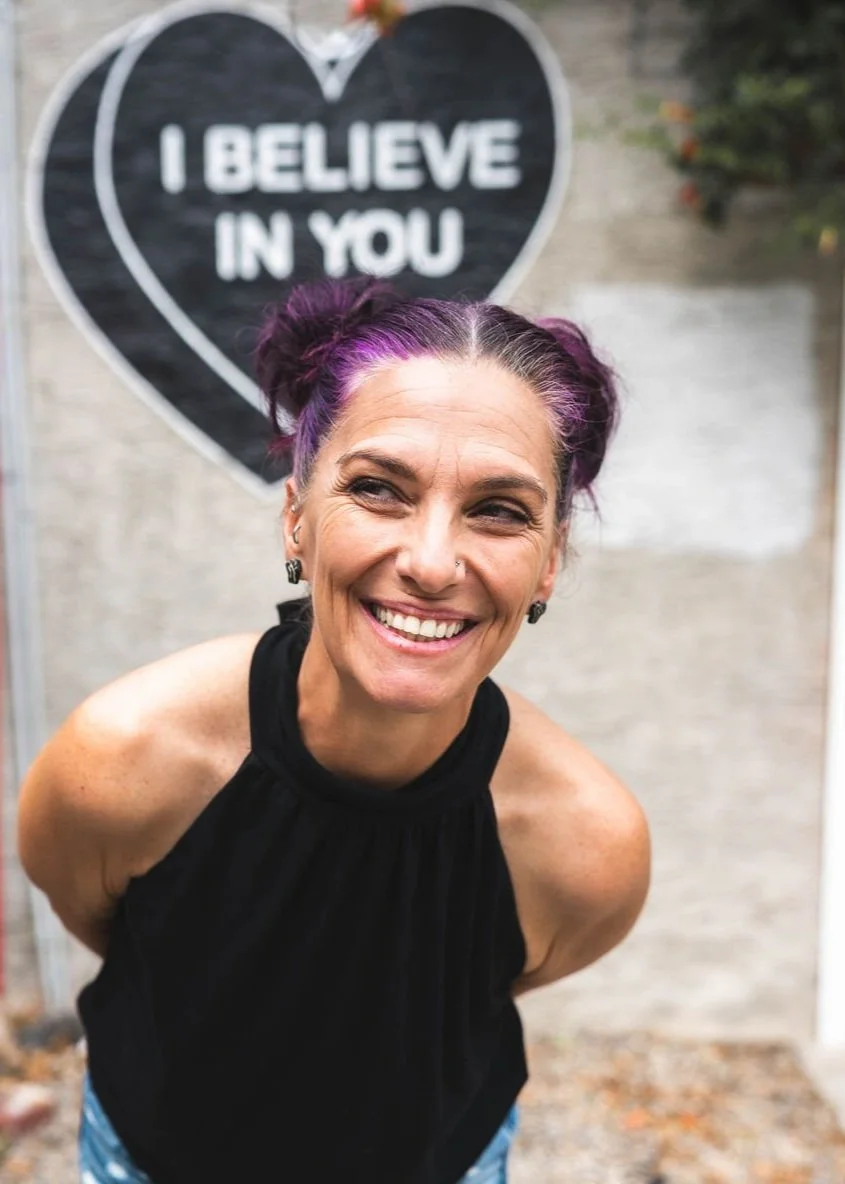
I'm a certified perinatal mental health professional (PMH-C), I'm in training to become an ADHD coach, and I've been working with the perinatal community in one way or another since 2010.
I'm also the mom this was built for. I know what it's like to run a household on a brain that forgets, hyperfocuses, and burns out on demand — and I know the difference a plan makes when you build it before you're drowning instead of after.
Happy moms raise happy kids. That's the whole reason I do this.
FAQs
What if I've already had my baby but I'm struggling?
Come as you are. The workbook actually works well for triage: we stabilize your nervous system first, then build the long-term plan. And the Deep Dive isn't pregnancy-only. The best time to build a plan that works is whenever you realize you need one.
What if I don't get the workbook done before my baby is born? Is there an expiration?
The workbook is yours forever, no expiration. Finish it whenever it gets finished. Then email it back to me and we'll book your Deep Dive, whether that's in six weeks, six months, or after your kid's first birthday. But if you need a deadline so you’ll finish it, just let me know and I’ll hold you accountable!
What if it's too overwhelming for me?
Bring whatever's done. Half a profile still tells me more than nothing, and we'll work from wherever you got to.
I hate phone calls. Can we do it another way?
Same. We can text back and forth for as long as it takes, or trade voice notes, whatever works for you.
What's a PMH-C?
A Certified Perinatal Mental Health Professional, through Postpartum Support International. It's a real certification with prerequisites, and I sat for the official exam to earn it. It means I'm specifically trained in perinatal mental health: what PMADs are, what they look like, and how to prevent them. I'm not a doctor or a therapist. I'm the prevention and planning piece.
What other credentials do you have?
Former middle school educator, certified yoga instructor, ADHD coach in training, plus a birth educator and doula background, and I'm a Fair Play Facilitator and Bringing Baby Home Educator. The short version: I've spent a lot of years helping people through big transitions.
Do you offer a money-back guarantee?
Yes. If you decide within 14 days of buying that it's not for you, just email me and I'll refund everything except $75, which covers the workbook, since that's digital and yours to keep.
What if I'm confused by some questions in the workbook?
Text me any time! Seriously. The workbook is meant to make you think, not confuse you, and if a question isn't landing, I'd rather explain it than have you skip it.
What if I struggle with postpartum anyway?
Then that's exactly what the support weeks are for. You won't be alone in it, I'll be in your corner helping you find the right help and resources, whether that's a therapist who gets perinatal mental health, a support group, your provider, or all three. A plan lowers the risk. It doesn't mean you're on your own if a PMAD shows up anyway.
plan for postpartum like your Whole life depends on it.
Because it kinda does.
Not sure yet? Book a free 15-minute call. No sales pitch and no pressure — just 15 minutes to see if i'm your person.